Fruit fly (Drosophila melanogaster) DNA


Extraction Method
Fruit fly (Drosophila melanogaster) DNA
FOR RESEARCH USE ONLY.
Contents
Introduction
Materials
Method
Results
Sequencing performance
Change log
Introduction
This protocol describes a method to extract high molecular weight genomic DNA from fruit flies (Drosophila melanogaster), as an example of insects, using nuclear isolation followed by DNA extraction using the QIAGEN Blood and Cell Culture DNA Midi Kit. Sequencing performance was assessed using the MinION.
Materials
- ~100 flies, frozen at –80°C
- QIAGEN Blood and Cell Culture DNA Midi Kit
- Sucrose
- EDTA
- Tris-HCl, pH 8.0
- Proteinase K
- Isopropanol
- 70% ethanol in nuclease-free water
- TE buffer (10 mM Tris-HCl, 1 mM EDTA, pH 8.0)
- 200 µm nylon mesh
- QIAGEN TissueRuptor II and probes
- Vortex mixer
- 15 ml Falcon tubes
- Refrigerated centrifuge and rotor for 15 ml tubes
- Incubator or water bath with capacity for 50°C and agitation capability
Method
Prepare the nuclear isolation buffer (0.35 M sucrose, 0.1 M EDTA, 50 mM Tris-HCl).
Add 10 ml of the nuclear isolation buffer to a 15 ml Falcon tube and add approximately 100 frozen flies. Note: we advise working quickly to avoid the flies thawing before being added to the buffer.
Homogenise the sample using TissueRuptor II with 2 x 15 second pulses on speed 2. No intact flies should be visible after homogenisation.
Place 2 layers of 200 µm nylon mesh into a fresh 15 ml Falcon tube. Using a 1 ml wide-bore tip, transfer the homogenised flies through the mesh into the Falcon tube.
Wash the nylon mesh with 2 ml of the nuclear isolation buffer. Repeat this wash step one more time. To avoid losing material, press the nylon mesh with a pipette tip to recover as much solution as possible. Discard the used mesh.
Centrifuge the filtered solution at 3500 x g for 15 minutes at 4°C. Discard as much supernatant as possible and retain the pellet.
Add 5 ml of Buffer G2 and 95 µl of Proteinase K to the pellet, and resuspend by pipetting up and down with a 200 µl wide-bore pipette tip.
Incubate at 50°C for 45 minutes with gentle mixing at 100 rpm. The lysate should be homogenous; if not, invert the tube 5 times and incubate for a further 15 minutes.
Equilibrate a QIAGEN Genomic-tip 100/G column with 4 ml of Buffer QBT.
Pour the lysate through the column.
Purify the lysate according to the standard protocol (steps 3–6, pages 50–52).
To maximize DNA yield, we recommend that the elution is performed overnight at room temperature in 150 µl TE buffer.
Results
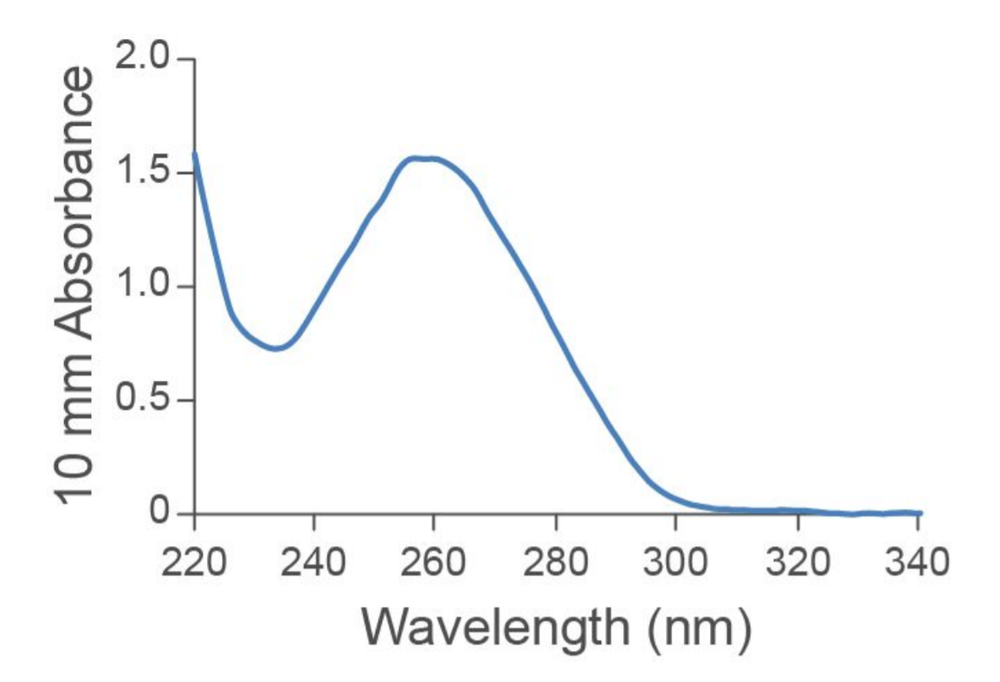
- Yield: 6–8 µg
- OD260/280: 2.01
- OD 260/230: 2.61
Sequencing performance
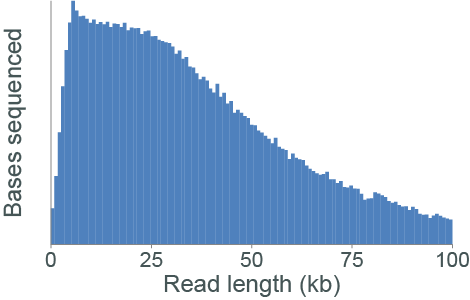
Libraries were prepared using the Ligation Sequencing Kit.
- Read length profile:
Change log
| Version | Change |
|---|---|
| v1, 19th August 2019 | Initial protocol publication |