Shearing genomic DNA using MegaruptorⓇ 3


Extraction Method
Shearing genomic DNA using MegaruptorⓇ 3
FOR RESEARCH USE ONLY.
Contents
Introduction
Materials
Method
Results
Change log
Introduction
Ligation Sequencing Kit protocols contain no designated fragmentation step. However, fragmentation of genomic DNA has been shown in some cases to provide benefits in:
- Reduction in library input requirements
- Increasing read length N50
- Reduction in pore blocking
This protocol contains information regarding the use of Megaruptor® 3 (Diagenode) for fragmenting gDNA for subsequent library preparation using the Ligation Sequencing Kit. Size selection of gDNA (for example, using the protocol ‘Size selection of HMW DNA by semi-selective DNA precipitation’) can be performed before Megaruptor® 3 shearing to help remove the shortest fragments.
Materials
- 2000 ng gDNA in 100 μl nuclease-free water
- Diagenode Megaruptor® 3
- Megaruptor 3 Shearing Kit : Cat. No. E07010003
- Nuclease-free water
- DNA QC equipment such as the Agilent FEMTO Pulse
- Microfuge
Method
- Optional step: Perform a size selection on your DNA sample using the Size selection of HMW DNA by semi-selective DNA precipitation protocol.
- Transfer 2000 ng of genomic DNA into a 0.5 ml sample tube supplied in the Megaruptor 3 shearing kit, and adjust the volume to 100 μl with nuclease-free water. Mix the DNA thoroughly by pipetting the sample. Spin down briefly in a microfuge.
- Transfer the sample to the Megaruptor 3, enter the shearing parameters into the instrument, and start the run.
- When the shearing step is complete, remove the fragmented DNA from the instrument.
- Analyse 1 μl of the fragmented DNA for fragment size (for example using the Agilent FEMTO Pulse).
- Use 1 µg of fragmented DNA in Ligation Sequencing Kit library preparation.
Results
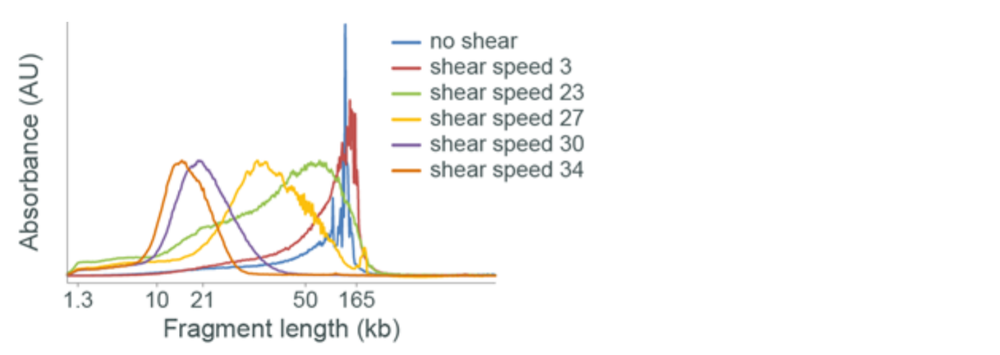
Figure 1. Fragment length profile after Megaruptor 3 shearing. Input DNA was fragmented using a variety of shearing speeds and the resulting DNA was analysed by FEMTO Pulse. A shearing speed of 3 appears to have had little impact on the fragment length profile, suggesting unsuccessful fragmentation. As the shearing speed is increased, the sample becomes progressively more fragmented.
Change log
| Version | Change |
|---|---|
| v1, September 2019 | Initial protocol publication |