Multiomics
Getting started guides
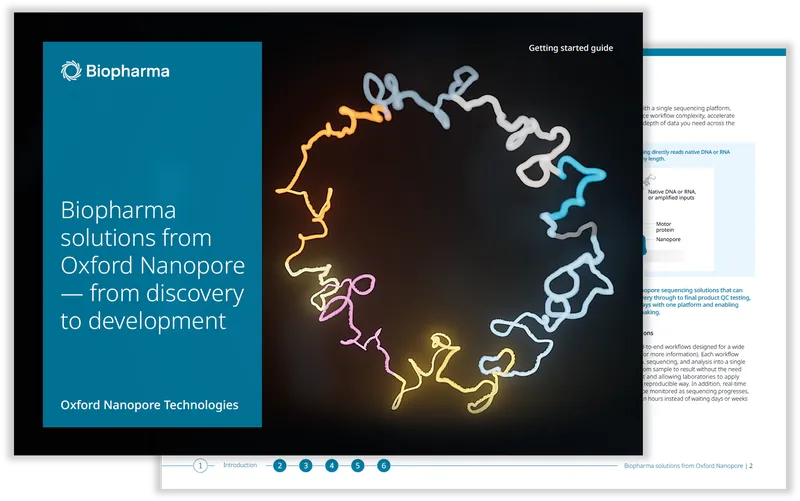
A guide to biopharma solutions from Oxford Nanopore — from discovery to development
This guide introduces Oxford Nanopore sequencing solutions for biopharma that can be applied from biomarker discovery through to final product quality control (QC) testing.
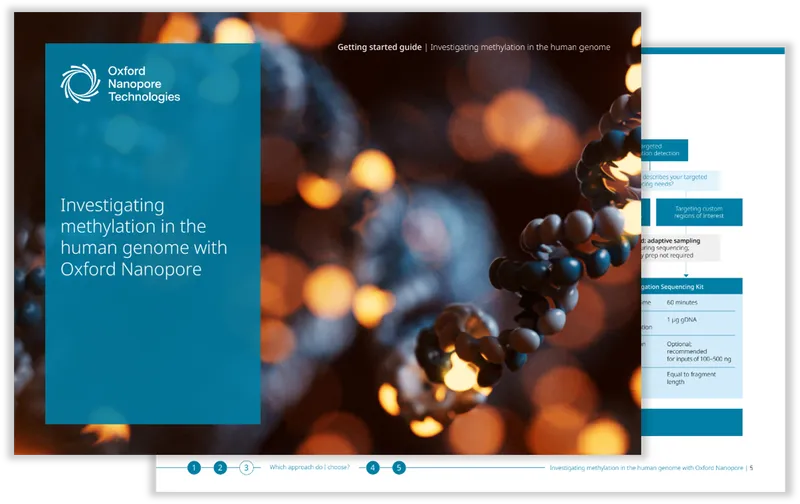
A guide to investigating methylation in the human genome
This guide provides an introduction to the direct sequencing of DNA methylation in human genomes.
Most viewed
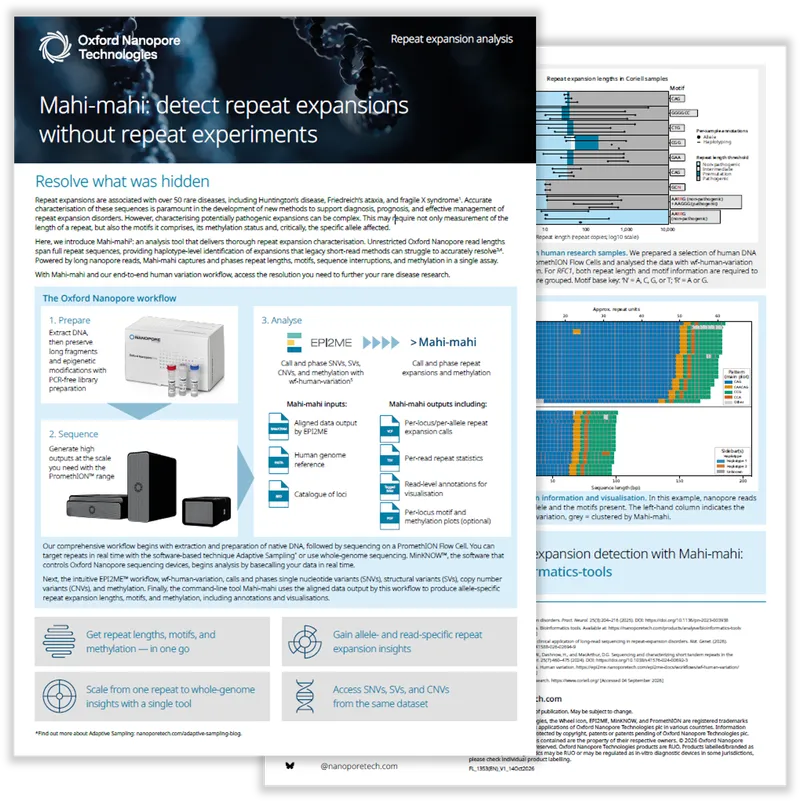
Mahi-mahi: detect repeat expansions without repeat experiments
In this flyer, discover Mahi-mahi: an analysis tool powered by Oxford Nanopore reads that captures and phases repeat expansion lengths, motifs, sequence interruptions, and methylation in a single assay.
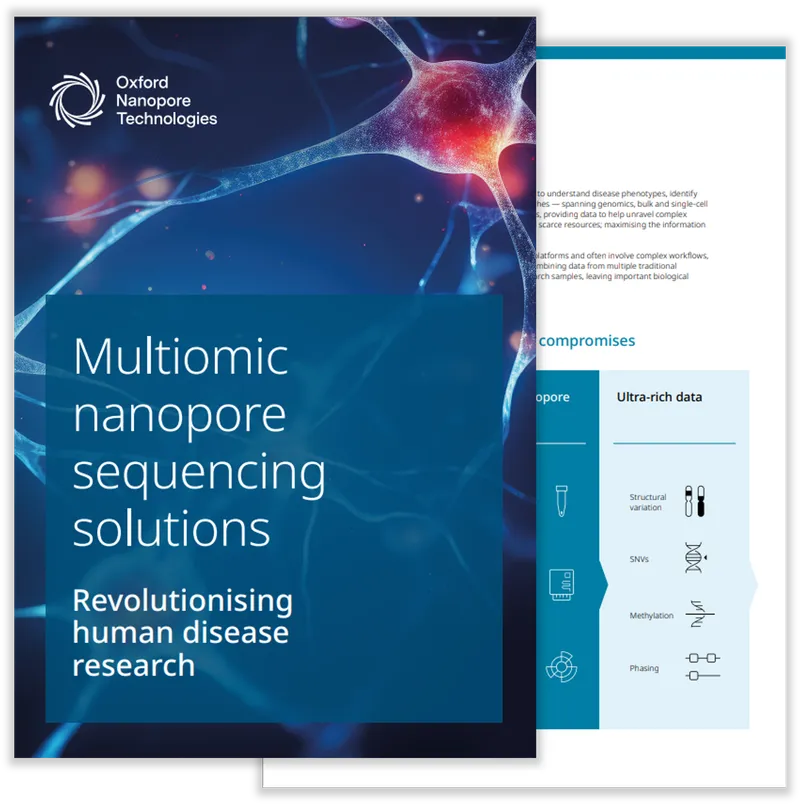
Multiomic nanopore sequencing: revolutionising human disease research
Find out how multiomic nanopore sequencing can accelerate your disease research using a single platform.
Featured resources

Building a multiomic homologous recombination deficiency clinical test using Adaptive Sampling | LC26
Homologous recombination deficiency (HRD) affects breast, ovarian, pancreas and prostate cancers. Patients with HRD tumours can respond to poly ADP-ribose polymerase (PARP) inhibitors and platinum-based therapies. HRD results in a variety of single base, insertion and deletion, and large structural
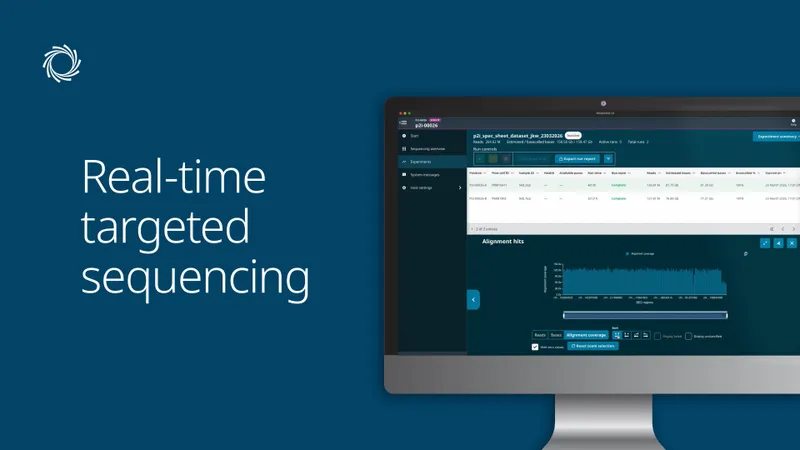
How do I perform real-time targeted Oxford Nanopore sequencing?
What if targeted sequencing took place during sequencing itself, without the need for special library prep, PCR, or probes? In this demo, discover Adaptive Sampling: a unique, real-time targeted enrichment/depletion method that achieves just that.

Large-cohort cDNA sequencing advances multiomic insights into neurodegenerative disease
In this case study, discover how Kimberley Billingsley and her colleagues at the National Institutes of Health are using Oxford Nanopore large-cohort cDNA sequencing to research the human brain transcriptome, enhancing understanding of the drivers of neurodegenerative diseases.

Which library prep workflow is right for my experiment?
Whether you’re sequencing DNA, RNA, or cDNA, a single sample or many in multiplex, there’s an Oxford Nanopore library prep kit for you. In this masterclass, discover how to choose the right one for your workflow.

From speed to scale: how do I choose the right human whole-genome sequencing workflow for my experiment?
In this masterclass, find the right human whole-genome sequencing workflow to meet your experimental goals. We’ll cover whole-genome analysis in just 24 hours through to scaling sequencing for large cohort research. In this masterclass, discover: • How Oxford Nanopore sequencing is advancing human g
Latest research
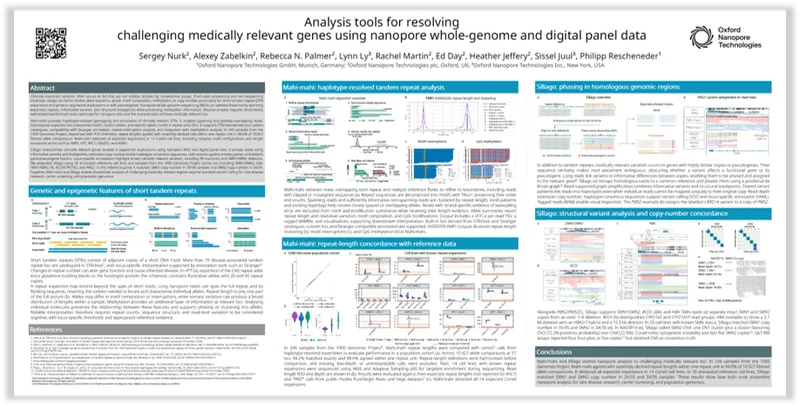
Analysis tools for resolving challenging medically relevant genes using nanopore whole-genome and digital panel data
Analysis tools for resolving challenging medically relevant genes using nanopore whole-genome and digital panel data
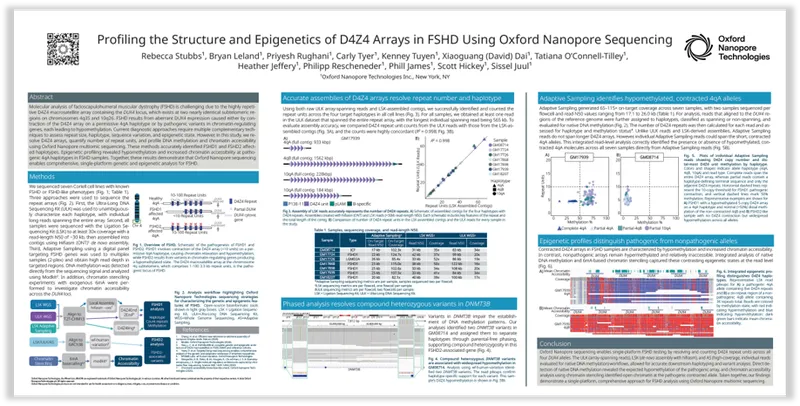
Profiling the structure and epigenetics of D4Z4 arrays in FSHD using Oxford Nanopore sequencing
Profiling the structure and epigenetics of D4Z4 arrays in FSHD using Oxford Nanopore sequencing

Exploring the methylation dimension
Watch this webinar to learn more about leveraging Oxford Nanopore gold standard methylation sequencing in your research.
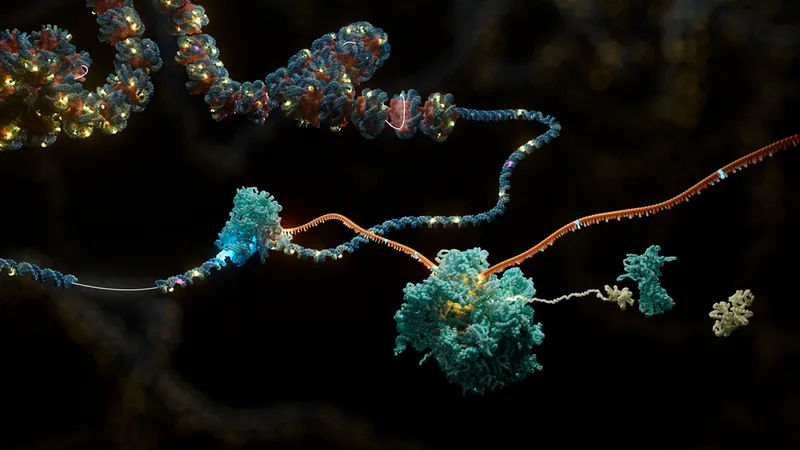
Decoding complex disease through multiomics
In this webinar, our expert speakers will discuss how multiomic Oxford Nanopore sequencing supports a deeper understanding of disease mechanisms, by integrating DNA, RNA, and epigenetic analysis — all on a single platform.
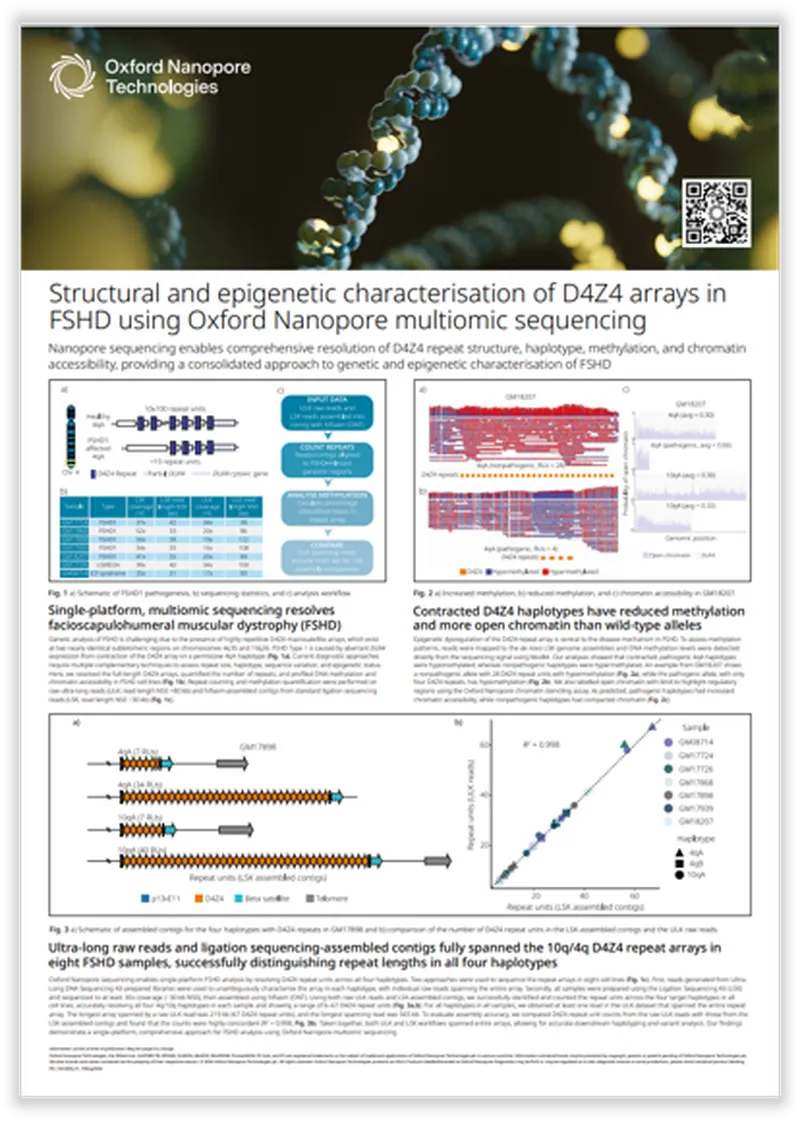
Structural and epigenetic characterisation of D4Z4 arrays in FSHD using Oxford Nanopore multiomic sequencing
Find out how Oxford Nanopore sequencing reveals genetic and epigenetic variation to characterise FSHD.


