Adaptive Sampling and digital panels
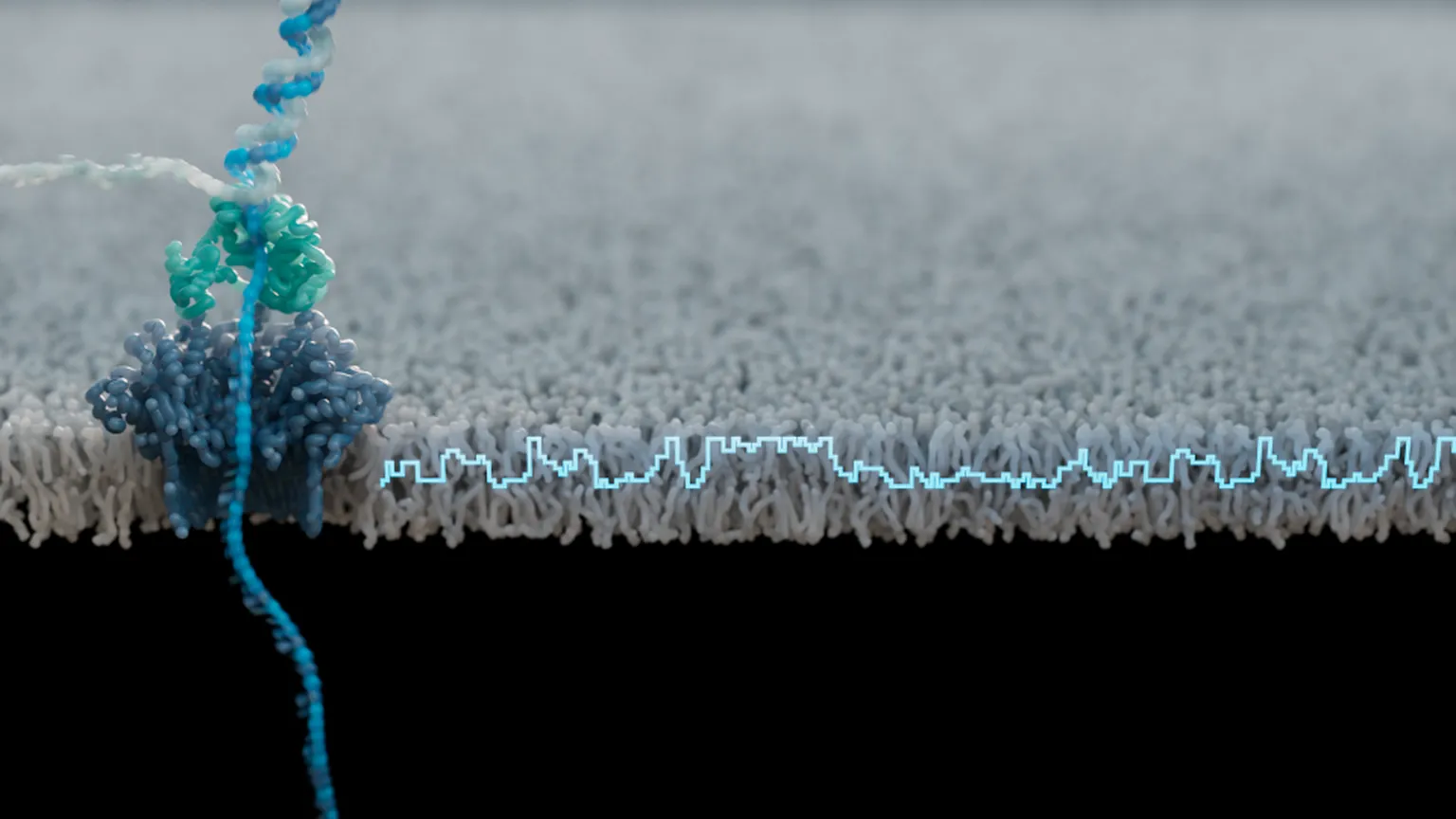
Targeted sequencing reimagined
Target regions of interest in real time without prior amplicon- or probe-based enrichment.
Digital panels, powered by Adaptive Sampling, let you break free from the constraints of traditional targeted sequencing assays. Update regions of interest in minutes and gain targeted insights alongside low-pass whole-genome data, plus methylation and phasing — all in one go.
Explore our ready-to-use digital panels
View our growing range of ready-to-use digital panels for research use only.
Design your own digital panels
Coming soon: create, modify, and customise digital panels using our intuitive Digital Panel Designer.
Why Adaptive Sampling and digital panels?
Adaptive Sampling is a unique on-device, real-time targeted sequencing approach that removes the need for wet-lab amplicon- or probe-based enrichment. A digital panel (BED file) defining the regions of interest is uploaded to the sequencing software. Native DNA molecules matching these regions are sequenced in full, whilst non-matching molecules are rejected from the nanopores. This increases coverage across targets, generates low-pass whole-genome data from off-target reads, and preserves methylation information.
- Simplify your workflow by eliminating time-consuming wet-lab enrichment
- Modify digital panel targets in minutes as your needs change
- Enrich full-length genes, whole chromosomes, and everything in between
- Get targeted and low-pass whole-genome data, plus methylation and phasing, in one run
How to get started
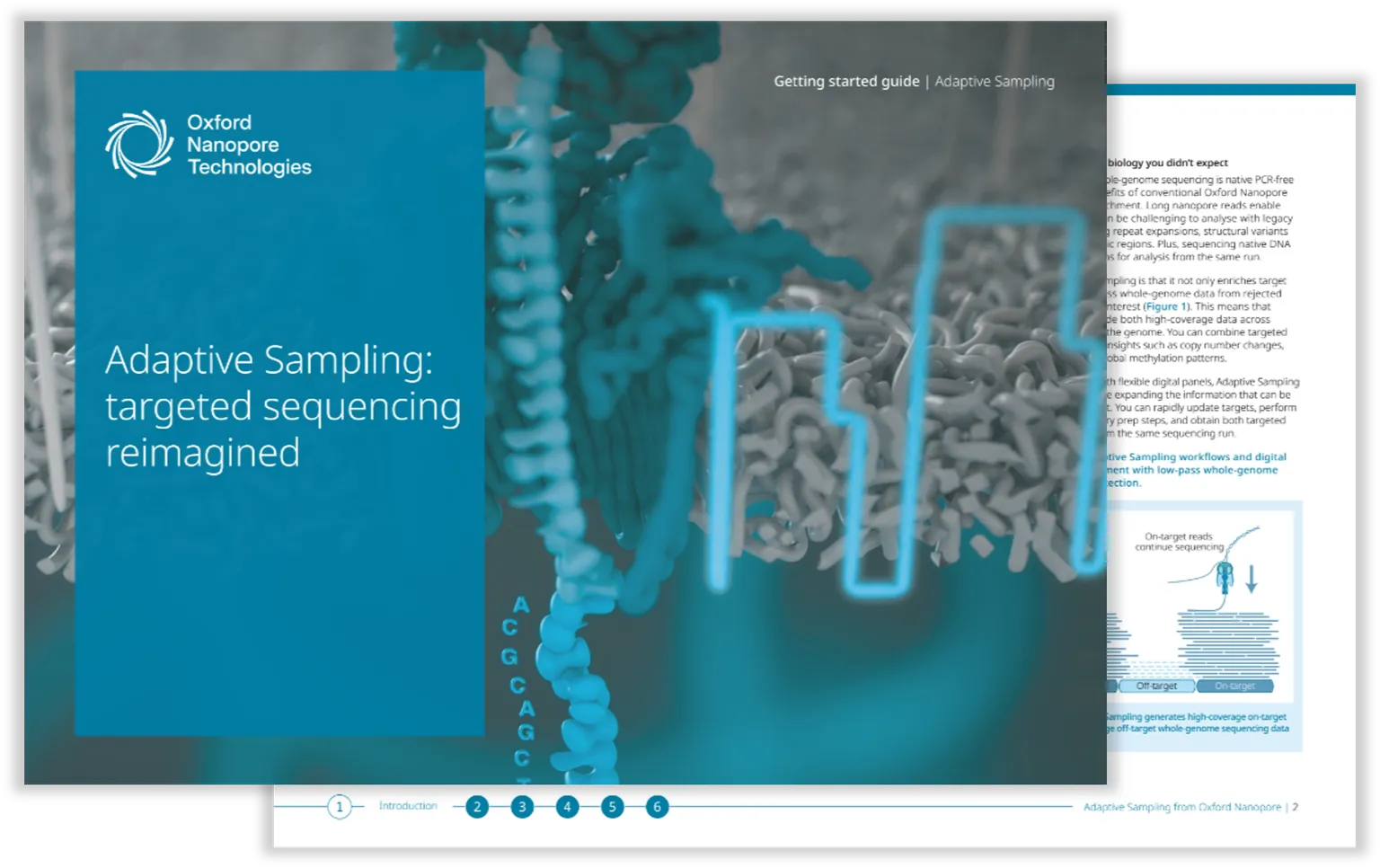
Learn how to use Adaptive Sampling and digital panels. This guide leads you through the whole sequencing workflow — from digital panel design to data analysis — helping you plan your next targeted sequencing project.
Ready-to-use digital panels
Our growing range of research-use-only digital panels includes:
| Hereditary Cancer Panel | Pharmacogenomics Panel | Pan-Cancer Panel | Pan-Haematological Cancer Panel | |
|---|---|---|---|---|
| Research application | Cancer predisposition | Drug response | Tumour profiling | Haematological malignancies |
| Research targets | 258 genes associated with hereditary cancer risk | 375 genes associated with pharmacogenetic effects | 723 genes associated with cancers | 144 genes associated with haematological cancers |
| Results | SVs, indels, SNVs, and methylation across target regions, plus genome-wide CNVs and methylation | SNVs, indels, and star alleles across target regions, plus methylation and enhanced CYP2D6 analysis | SVs, indels, SNVs, and methylation across target regions, plus genome-wide CNVs and methylation | SVs, indels, SNVs, and methylation across target regions, plus genome-wide CNVs and methylation |
| Find out more | Find out more | Find out more | Coming soon |
FAQs
What sequencing device should I choose?
For targeted sequencing with digital panels, powered by Adaptive Sampling, we recommend the PromethION devices as they provide the necessary compute for efficient on-sequencer enrichment.
The PromethION 2 Integrated enables sequencing on two independent flow cells, providing streamlined, affordable sequencing for every lab. For higher-throughput requirements, the PromethION 24 offers sequencing on up to 24 independent flow cells, supporting the analysis of thousands of samples per year.
Can I customise ready-to-use digital panels?
Ready-to-use research-use-only digital panels can be modified in minutes with our online Digital Panel Designer (coming soon). Simply select the digital panel you want to modify and customise your targets by either adding or removing any genes or regions of interest. The designer will then generate the files needed for a successful Adaptive Sampling run. Find out more.
How can I analyse my data?
Our sequencing software MinKNOW performs real-time data acquisition and basecalling during sequencing, including methylation detection. After sequencing, your data can be analysed using our EPI2ME workflows or via instructions in our somatic analysis bioinformatics guide, depending on your application. View our getting started guide for more information.
How is Adaptive Sampling different from amplicon or hybrid-capture sequencing?
Adaptive Sampling doesn’t require upfront design or purchase of amplicon primers or hybrid-capture probes for target enrichment, removing the need for multi-day wet-lab enrichment and optimisation workflows. Instead, a digital panel (BED file) defining the regions for enrichment is uploaded to MinKNOW, the sequencing software, for streamlined on-device target enrichment.
During sequencing, the start of each DNA molecule is analysed in real time against the regions defined in the digital panel. Molecules matching a target continue to be sequenced, while non-target molecules are rejected so another molecule can enter the nanopore. This increases coverage across regions of interest, while the initial sequence generated from rejected molecules provides low-pass whole-genome data that can support analysis of copy number changes, large chromosomal abnormalities, and global methylation patterns.
Because PCR is not required during library preparation, native DNA is sequenced directly, retaining methylation information. Long nanopore reads (approximately 6–10 kb using the recommended Adaptive Sampling protocol) can support the characterisation of repeat expansions, structural variants, fusions, and other complex genomic regions.
Read more about how Adaptive Sampling works.
How large can an Adaptive Sampling digital panel be?
Adaptive Sampling can target anything from individual genes to large genomic regions or whole chromosomes. For optimal enrichment, we recommend targeting between 0.1–5% of your reference genome. View our Adaptive Sampling technical guide for more information.
Does Adaptive Sampling preserve DNA methylation information?
Yes. Adaptive Sampling sequences native DNA without requiring PCR-based target enrichment, preserving DNA methylation information for analysis alongside the underlying sequence. This allows you to investigate methylation together with targeted and low-pass whole-genome data, providing a comprehensive multiomic view from a single sequencing run.
Find out more about our gold-standard methylation detection.
Can I multiplex samples with Adaptive Sampling?
Yes. Barcoded samples can be pooled and sequenced together using Adaptive Sampling, allowing multiple samples to be analysed on the same flow cell. The number of samples you can multiplex will depend on the sequencing output and coverage required for your application.


