Cell storage


Requirements
Cell storage
FOR RESEARCH USE ONLY.
Note: the data displayed was generated using our legacy chemistry (SQK-LSK109), but the outcomes and recommendations are still applicable to our current chemistry.
Human cells grown in culture are a common source of nucleic acid and often, it is necessary to store harvested cells before extracting the DNA/RNA of interest. We have found that the storage medium can have an impact on the fragment length and read length of the extracted DNA and subsequent sequencing libraries, respectively. GM12878 cells (5 x 10⁶) were harvested, pelleted and stored “dry” (in the absence of media) or re-suspended in a solution comprising of 10% glycerol, or a solution comprising of 20% FBS (foetal bovine serum) and 6% DMSO. The cells were stored for one month at -80°C before the DNA was extracted using the QIAGEN Puregene Cell Kit. All samples were SPRI size-selected and sequenced using our Ligation Sequencing Kit. Below are the results regarding the N50 variation. We found no significant difference in throughput (all samples generated 3 star performance; 8+ Gb on FLO-MIN106). We recommend customers are mindful of the effects of different storage conditions of cells and advice to store human cells in solution of 20% FBS and 6% DMSO for best results as illustrated in the data below.
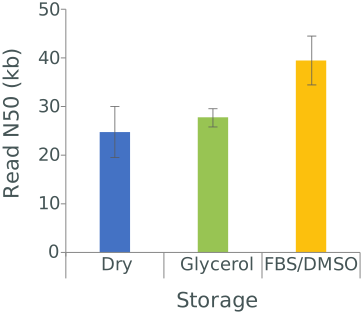
Figure 1. The effect of cell storage medium on the observed read N50 of DNA sequencing libraries. These data show that storage in 20% FBS and 6% DMSO preserves the cells in manner that can deliver longer read N50s in downstream sequencing.
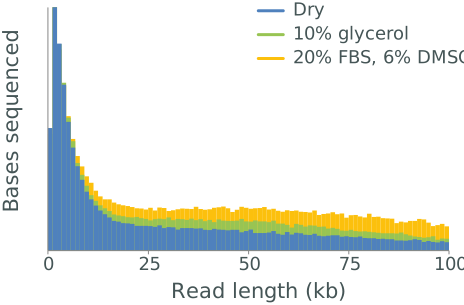
Figure 2. The effect of cell storage medium on the observed read length distribution of DNA sequencing libraries. These data show that storage in 20% FBS and 6% DMSO preserves the cells in a manner that can deliver longer read N50s in downstream sequencing.
| Version | Changelog |
|---|---|
| v2, November 2022 | Updated QIAGEN Puregene kit name and link |
| v1 | Initial protocol publication |